IPB Lecturers Introduce How to Utilise Rice Straw into Bio-pots with Economic Value
 adminRFA
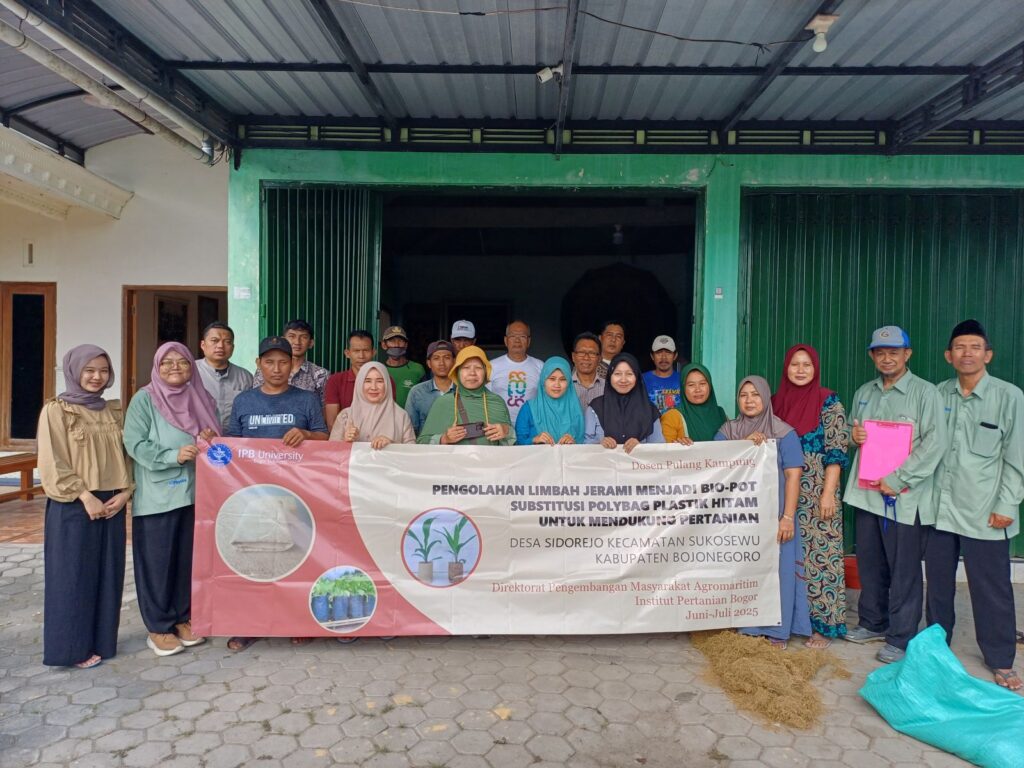
Bojonegoro, 27/06 – Through the community service programme of the IPB University Directorate of Agromaritime Community Development (DPMA) in Sidorejo Village, Sukosewu District, Bojonegoro Regency, a team of IPB lecturers taught how to process rice straw waste into a more useful product, namely bio-pots.
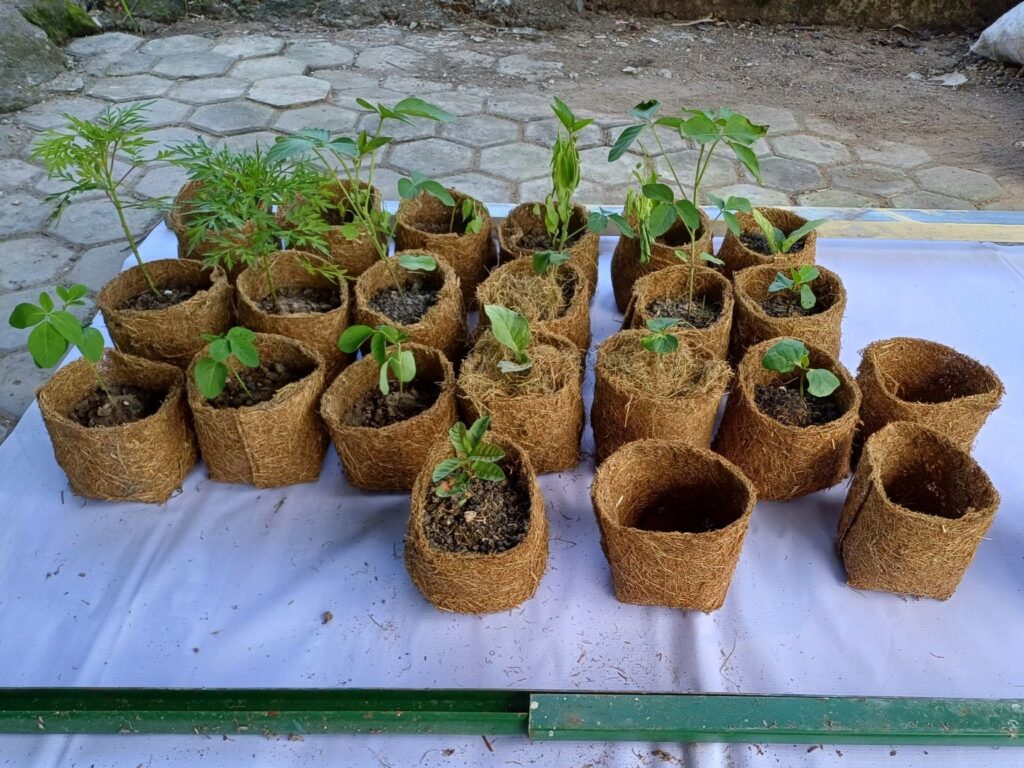
The team, led by Dr. Siti Nikmatin from the Department of Physics at IPB, introduced the method of making geotextiles, which are sheets of material made from randomly arranged biomass fibres that have pores and are permeable to water and light. The geotextiles produced can be used to make various derivative products, one of which is bio-pots. The production of bio-pots is one solution for processing rice straw waste in the Sidorejo Village environment.
‘Until now, damen (rice straw waste) has been used as cattle feed or burned,’ said one of the participants in the socialisation. With this processing, rice straw waste can be reused to make more useful products. The advantage of bio-pots over polybags or plastic pots is that they are biodegradable, or can be naturally decomposed as additional fertiliser, so there is no need to bother with replacing the planting medium and plastic polybags.
In addition to disseminating information on how to make geotextile bio-pots, the IPB lecturer team also provided several machines to support geotextile production, namely a straw shredder, compressor, sprayer, and cutting machine.
‘These bio-pots are one solution to reduce rice straw waste in the Sidorejo Village environment. It is currently the rice harvest season, and straw is abundant. This waste is usually just burned, with only a small portion used as animal feed, causing environmental problems. With these bio-pots, the community can make better use of rice straw waste, either by selling it or using it themselves,’ said Dr. Siti Nikmatin.
The programme has been enthusiastically received by the community. “We are very grateful to IPB for teaching us something new. With these pots, we can plant without buying polybags or pots. We hope that such activities will continue to be carried out,” said M. Islah, chairman of the Karya Tani farmer group in Sidorejo Village.