Tracer Study
 adminRFA
Tracer Study is an institutional evaluation activity conducted to obtain feedback from graduates regarding the relevance of the educational process to employment and further study needs. This activity aims to identify graduate profiles, waiting periods to obtain first employment, the relevance between academic background and current occupation, income levels, as well as graduates’ assessments of the competencies and learning processes acquired during their studies. The information collected serves as an important basis for improving educational quality, curriculum development, and strengthening graduate learning outcomes.
The tracer study implementation in the Department of Physics is carried out periodically and integrated with the university-level tracer study coordinated by the Directorate of Partnership and Alumni Relations (DKHA) of IPB University. The tracer study instrument has been aligned with the national tracer study standards established by the Ministry of Higher Education, Science, and Technology of Indonesia. Therefore, the collected data can support continuous quality evaluation in higher education. In addition to serving internal evaluation purposes, the tracer study also functions as a communication bridge between the study program, alumni, and graduate employers in supporting the development of graduates who are adaptive to advances in science, technology, and labor market demands.
Graduate Waiting Period
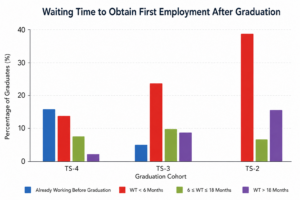
The tracer study results indicate that most graduates were able to obtain employment within a relatively short period after graduation. A significant proportion of alumni secured jobs within six months, demonstrating that graduates possess competencies and skills that are relevant to labor market demands. This finding reflects the strong competitiveness and employability of graduates in various professional sectors.
Graduate Career Profile
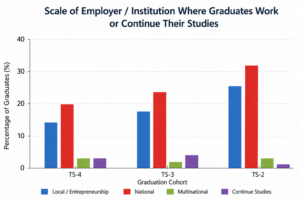
Graduates are employed across diverse sectors, including government institutions, private companies, research centers, educational institutions, entrepreneurship, and postgraduate studies. The career distribution shows that alumni are able to adapt to multidisciplinary work environments at local, national, and international levels. In addition, many graduates work in positions closely related to their academic background, indicating the relevance of the curriculum to professional needs.
Average Graduate Income
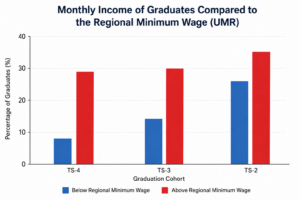
The tracer study also shows that the average income of graduates is generally competitive and aligned with regional salary standards. A considerable number of alumni receive salaries above the regional minimum wage, reflecting the quality and competitiveness of graduates in the workforce. This result indicates that the competencies acquired during their studies provide added value in supporting graduates’ professional careers and economic opportunities.